The Volunteer Clause: Who Actually Writes the Rules Europe's AI Regulators Will Enforce
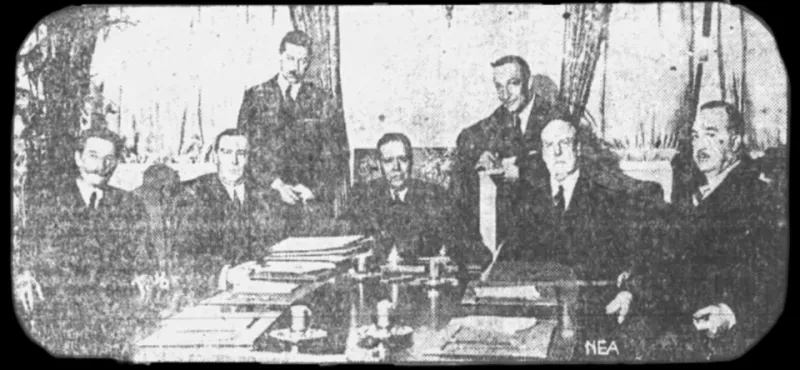
Photo: Newspaper Enterprise Association, Public domain, via Wikimedia Commons
Regulation is written in public and interpreted in private. The AI Act, and the national statutes now shadowing it, set out obligations in broad terms: risk management, data governance, transparency, human oversight. What those obligations mean in practice is settled elsewhere, in working groups and technical committees whose members are nominated by national bodies, funded by employers and rarely named in a press release.
The standards that emerge from those rooms do not merely advise. Once cited in the official journal, a harmonised standard confers a presumption of conformity. A supplier that follows it is presumed compliant. A supplier that does not must prove its own case to every buyer, auditor and regulator it meets. That is an extraordinary delegation of interpretive power, and it flows to whoever can afford to sit in the room.
The arithmetic of a seat
Participation in European and international standards work is typically unpaid. National mirror committees, the European committees that develop harmonised standards, and the international groups beneath them operate on consensus and donated time. The delegate's employer absorbs salary, preparation, travel and the opportunity cost of weeks away from delivery.
The estimate most often quoted by participants is twenty to forty days a year for a substantive role, more for a chair or rapporteur. Membership fees for national standards bodies are modest by corporate standards; the real expenditure is the person. Which means the composition of these committees is determined less by expertise than by which organisations can spare a specialist for a year, and which specialists can afford to be spared.
Who is in the room
The consequence is a narrow population: staff of large vendors, consultants whose participation is a business development channel, academics with funded time and a small number of independent experts subsidising the public interest out of personal commitment. Women are present, and in some working groups well represented, but the pattern across the standards landscape is familiar from every other unpaid convening structure in technology. Those with caring responsibilities, portfolio careers or employers who measure output in billable hours are systematically less likely to appear.
The absence is not neutral. A committee that has never discussed how a conformity assessment affects a small supplier, a public-sector buyer or a worker subject to an automated decision will produce a standard that assumes a particular kind of organisation. The text is not biased in tone. It is biased in what it takes for granted.
Why this is a procurement question
Public buyers increasingly reference standards in tender specifications, and private buyers follow. When a specification says that a system must demonstrate conformity with a named standard, the standard becomes the market access rule. Suppliers shaped by committees they could not attend are scored against criteria they did not influence.
For UK firms selling into Europe, the asymmetry is sharper. Post-Brexit, the UK has no automatic seat at the European table. Influence runs through national mirror committees, through international workstreams where UK experts still participate, and through the informal channels of an industry that reads drafts early. A firm that treats standards work as an irrelevance is choosing to discover requirements at the point of procurement.
The sponsorship case
Employers who value this work tend to do the same few things, and none of them is expensive relative to their effect.
Budget the time explicitly. A standards role should appear as an allocated cost with a named number of days, not as an understanding that someone will manage it around their day job. Unbudgeted participation is unpaid labour with a corporate logo attached.
Name a delegate and an alternate. Single-person representation creates fragility and discourages succession. Pairing a senior specialist with a mid-career colleague builds continuity and distributes the network.
Pay the expenses without argument. Travel, subsistence, national body membership and the occasional interpretation cost. The refusal to reimburse a modest train fare has ended more standards careers than any technical disagreement.
Recognise it in appraisal. If committee work does not count towards progression, the organisation has told its staff precisely how much it values the contribution. Objectives, evidence and promotion criteria should name it.
Report participation. Publish who represents the firm, in which committees, and how many days were allocated. Disaggregate by gender. Measurement is the cheapest intervention available and the one most consistently skipped.
The three objections
First, that the firm is too small. Smaller firms can participate through trade associations, national bodies and shared delegate arrangements; consortium sponsorship of a single seat is permitted and underused.
Second, that standards work is not commercial. It is commercial in exactly the way that early sight of a draft specification is commercial, and in the way that being known to a regulator is commercial when an incident occurs.
Third, that the person cannot be spared. This is usually true and usually a statement about planning rather than capacity. Organisations find time for activities they have decided to value.
A modest proposition
UK tech employers talk frequently about shaping the regulatory environment and about increasing the number of women in senior technical roles. Standards committees sit at the intersection of both claims, and they are reachable. A firm that funded ten women a year to take substantive seats, paid their expenses, counted their days in the delivery plan and published the record would do more for the diversity of European AI governance than a decade of panel appearances.
The rules are being drafted now, by people whose employers could spare them. That is the whole of the selection mechanism, and it is not good enough.