The Same Few Voices: Who Really Sets the Agenda on UK Tech Stages
The programme is the policy
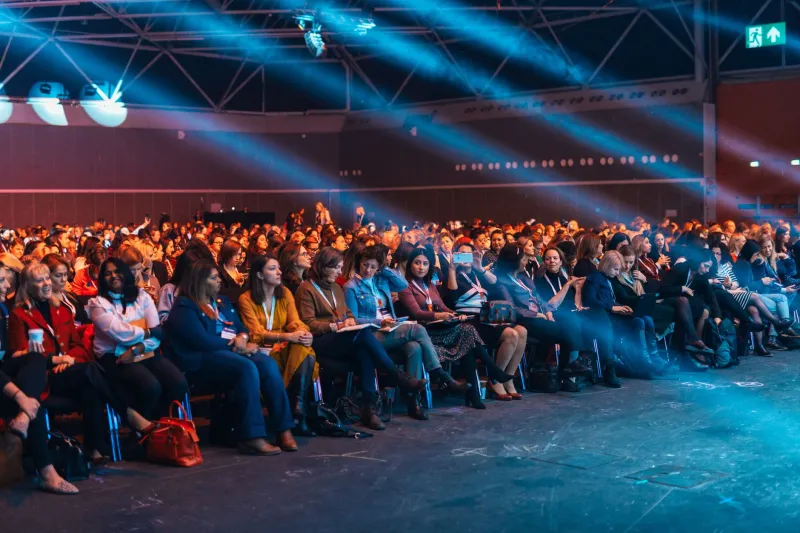
A conference agenda looks like a timetable. In practice it is a statement of priorities. It shows which topics are considered strategic, which speakers are considered authoritative and which parts of the UK tech sector are treated as the natural centre of gravity. For women in tech, especially those outside London or outside the most visible engineering brands, the line-up is therefore not a neutral artefact. It is a map of who gets to define the agenda.
Auditing that map is not an exercise in naming and shaming individual speakers. It is a way to see the infrastructure of reputation. In 2026, the UK conference circuit remains a significant source of professional legitimacy: a keynote can lead to board interest, a panel can lead to a consultancy inquiry, and a repeat booking can cement a speaker as the sector's default voice on a topic. If the same names recur, the same perspectives harden into common sense.
What to track in a 2026 line-up audit
A credible audit starts with the published programme, not with anecdote. Build a simple spreadsheet and record the following for each event you review:
- Repeat appearances: speakers who appear at three or more UK tech events within twelve months.
- Panel composition: sessions with no women, all-male panels, and panels where women appear only in diversity, wellbeing or early-careers slots.
- First-time speaker share: how many names are new to the circuit, and whether the event has a stated pipeline for new voices.
- Topic concentration: whether women are booked for technical keynotes and commercial strategy, or funnelled into culture panels.
- Paid versus unpaid slots: whether speakers receive a fee, travel costs, accommodation and accessibility support.
- Access costs: childcare, caring responsibilities, disability access, travel time and whether the event is London-centric.
- Chairing and Q&A roles: who moderates, who fields questions and who gets the closing word.
This is not a perfect method. Published programmes change, speakers withdraw and organisers sometimes add sessions late. But even a modest audit reveals patterns that individual attendees miss. The point is to move from complaining that a line-up feels narrow to showing how it is narrow, where, and for whom.
The repeat-booking trap
The most uncomfortable finding in any audit is usually the same: a small group of women appears again and again. This is not evidence that those women are undeserving. It is evidence that organisers prefer known quantities. A familiar speaker reduces risk. She has a track record, a polished deck and a diary that can accommodate the date. For a busy programme committee, that is attractive.
The problem is structural. Repeated bookings create a narrow visible cohort, while a wider pool of qualified women remains invisible. The answer is not to remove established speakers from the stage. It is to ask organisers to pair reputation with pipeline: one established voice, one newer voice, one speaker from outside the usual metropolitan circuit. A panel that is diverse only because it repeats the same three women is not diverse. It is a closed loop with better optics.
Questions to put to organisers
Women in tech are often advised to pitch better. That advice is necessary but incomplete. Organisers also need to be asked better questions. Before submitting a proposal, consider asking:
- How are speakers sourced, and is there an open call as well as direct invitation?
- Will you publish panel composition data after the event?
- What is your policy on all-male panels, and who signs it off?
- Are speakers paid, and are travel, accommodation, childcare and accessibility costs covered?
- What support do you offer first-time speakers, including rehearsals or mentor review?
- What is the selection timeline, and will unsuccessful applicants receive feedback?
- How do you handle late cancellations, and will you replace a speaker with someone from a similar background or expertise?
- Will you share the audience profile and the questions most frequently raised in Q&A?
These questions are not hostile. They are the questions a serious event should be able to answer. If an organiser cannot say how speakers are chosen, that is itself a finding.
A speaker-pitch calendar for the next twelve months
By November 2026, many spring and summer 2027 programmes are already taking shape. A practical calendar helps women in tech move from reactive applications to deliberate positioning.
- November to December 2026: audit the 2026 events you attended or followed. Update your speaker bio, record a short video of a recent talk, and identify six events that match your expertise rather than your aspiration.
- January 2027: draft pitches for spring and early-summer calls for speakers. Tailor each proposal to the event's stated theme and audience.
- February to March 2027: submit to events with spring deadlines, including regional festivals and specialist technical conferences. Offer to moderate a panel as well as speak.
- April to May 2027: follow up politely, ask for selection timelines and propose a pre-recorded lightning talk if the main programme is full.
- June to August 2027: submit for autumn events, refresh your case studies and collect evidence of impact from any spring appearances.
- September to October 2027: deliver talks, ask for video and audience feedback, and update your bio with the new material.
- November to December 2027: review what worked, thank organisers and begin the next audit cycle.
Turning expertise into a bookable bio
A conference bio is not a shortened CV. It is a booking document. It should answer three questions quickly: what problem do you help people understand, why are you credible on it, and what will the audience leave with?
- Lead with the problem, not the job title.
- Include one line of evidence: scale, outcome, regulatory context or a notable delivery.
- State the audience and format you are best suited to, such as a technical deep dive, a leadership panel or a practical workshop.
- Provide two links: one video and one written artefact.
- Avoid unexplained acronyms and internal job titles.
- Prepare 50, 100 and 200-word versions for different programme formats.
- Include accessibility requirements or pronouns only if you wish to, but do not feel obliged to disclose personal details to be bookable.
The ask
The microphone is not a reward for being the most visible person in the room. It is a resource that shapes what the UK tech sector believes, funds and prioritises. In 2026, women in tech should pitch with precision, but organisers should also be asked to publish their selection data, explain their choices and build a pipeline rather than recycling a shortlist. Representation on stage is not a courtesy. It is a quality signal.