The Unofficial Vouch: How Whispered References Decide UK Tech Hiring
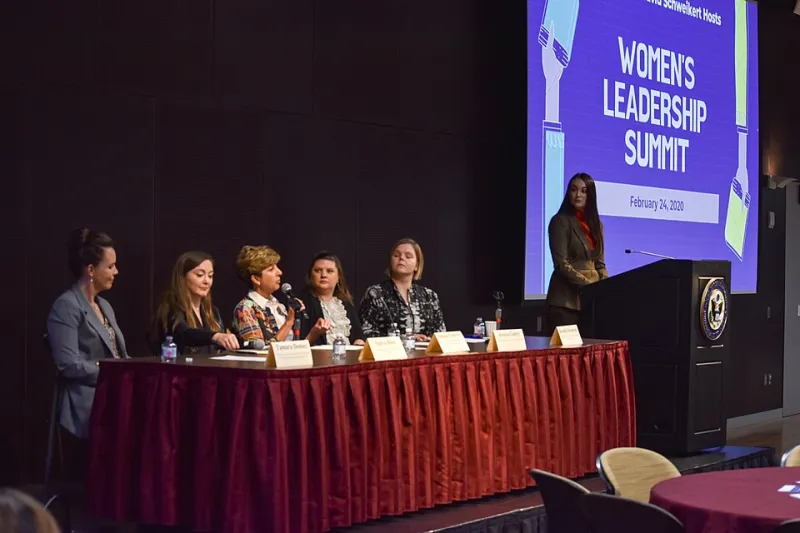
Photo: Office of David Schweikert, US Congress, Public domain, via Wikimedia Commons
UK tech likes to present hiring as a tidy sequence: advert, application, interview, offer. In practice, a candidate’s fate is often settled earlier, in a series of informal calls that leave no trace in the applicant tracking system. A hiring manager messages a former colleague. A recruiter asks around. Someone in a Slack community is invited to offer ‘the real story’. These back-channel references are rarely malicious, but they are rarely fair either — and they can weigh disproportionately on women, career returners and candidates whose networks do not run through London.
The call before the call
Formal references usually arrive after an offer, and they are narrow: dates of employment, job title, perhaps a line on conduct. The informal reference is different. It happens before shortlisting, often before the role is even advertised. It is conversational, unrecorded and unconstrained by a common set of questions. One hiring manager might ask whether a candidate is ‘solid’; another might ask whether they are ‘someone you would want on the team’. The second question sounds warmer. It is also more dangerous, because it invites the referee to assess likeness rather than capability.
For employers, the appeal is obvious. A quick call can save weeks of interviewing. For candidates, the risk is less visible. A positive whisper can accelerate a process; a lukewarm one can end it before the candidate has spoken to anyone. The asymmetry matters: the candidate is usually unaware that the call took place, cannot correct the record and may never learn why an application stalled.
How ‘fit’ becomes a filter
‘Culture fit’ is the phrase that does most of the work in these conversations. It sounds neutral, even generous. In practice, it often functions as a proxy for similarity: accent, school, previous employer, hobbies, the ability to join after-work drinks at short notice. None of those things predicts whether someone can design a reliable system, manage a migration or lead a team through an incident. But they are easy to discuss in a whispered reference, and hard to challenge afterwards.
UK employment law does not ban informal references, but it does not make them risk-free. The Equality Act 2010 protects candidates against discrimination on grounds including sex, race, disability, age and pregnancy. If an unstructured ‘fit’ conversation becomes a way of filtering out people with caring responsibilities, or those who do not share a hiring manager’s social reference points, the employer is accumulating legal and reputational exposure. Acas guidance on recruitment already points towards consistency and record-keeping. Back-channel references sit awkwardly outside both.
There is a data protection dimension too. Under UK GDPR, candidates can request the personal data an organisation holds about them. But a verbal reference that was never written down may not exist in any retrievable form. The invisibility that makes the practice convenient also makes it difficult to audit, contest or improve.
The London gravity problem
Informal references reward visibility, and visibility in UK tech is unevenly distributed. Venture-backed startups, fintech firms and scale-ups cluster around London, where hiring managers, recruiters and founders often share the same few networks. Candidates in Manchester, Leeds, Bristol, Edinburgh, Cardiff or Belfast may be equally strong, but less likely to be known to the person making the call.
Women face a related penalty. Research on professional networks consistently finds that women receive fewer spontaneous sponsorship opportunities and are less likely to be recommended for stretch roles. Career returners lose network currency during a break, even when their technical skills remain current. The informal reference does not simply reflect those gaps; it amplifies them, because it converts who you know into a verdict on what you can do.
A European contrast
Several European employers offer a useful counterpoint. Larger firms in Germany often use structured interviews with defined criteria and multiple assessors. Dutch employers frequently run multi-stage processes with documented scoring. Nordic organisations tend to emphasise transparent recruitment and standardised questions. None of these systems is perfect, and informal networks still matter everywhere. But the stronger ones make the informal part of hiring visible enough to be challenged.
European pay transparency rules are pushing in the same direction. The EU Pay Transparency Directive, which member states must transpose by June 2026, requires employers to define pay criteria and job architecture more clearly. That scrutiny inevitably reaches recruitment: if you must explain how a role is graded and paid, you are more likely to have to explain how someone was selected. UK candidates applying to European employers increasingly encounter structured processes that make the British ‘quick call’ look antiquated.
What employers can do
The first step is consent. If an organisation intends to seek informal views on a candidate, it should tell the candidate, name the referee where possible and explain how the information will be used. The second is standardisation. Reference questions should be tied to the competencies in the job description, not to vague impressions of ‘fit’. Responses should be recorded in the applicant tracking system, even if only as a short summary.
Employers should also separate ‘culture fit’ from ‘culture contribution’. The first asks whether someone resembles the existing team; the second asks what they would add. Structured interviews, work samples and diverse panels reduce the space in which a whisper can override evidence. Recruitment agencies should be contractually required to follow the same rules. And organisations should audit who receives informal references in the first place: compare outcomes by gender, ethnicity, region and career-break status. If the pattern is skewed, the process is the problem.
What candidates can do
Candidates cannot abolish the back channel, but they can reduce its power. Ask, at the start of a process, whether informal references will be taken and from whom. Offer referees who can speak directly to your work rather than your personality. Keep a personal record of projects, outcomes and feedback — a ‘vouch file’ that makes it easier for allies to advocate accurately. Build peer networks through professional bodies, employee resource groups and specialist communities, not only through employer-led events.
If you suspect that an informal reference has influenced a decision, you can ask for feedback and, where relevant, make a subject access request under UK GDPR. You are unlikely to receive a verbatim account of a verbal call, but the request itself signals that hiring is not a private conversation.
The verdict before the evidence
Fair hiring is not only about what happens in the interview room. It is also about the calls that happen before the room is booked. UK tech cannot claim to be meritocratic while allowing reputations to be settled in unrecorded conversations between people who already know each other. The fix is not to ban informal references; it is to make them structured, consented to and visible. Until then, the most important interview may be the one the candidate never attends.