The Vote-Free Chair: Making Board Observership a Real Route to Directorship in UK Tech

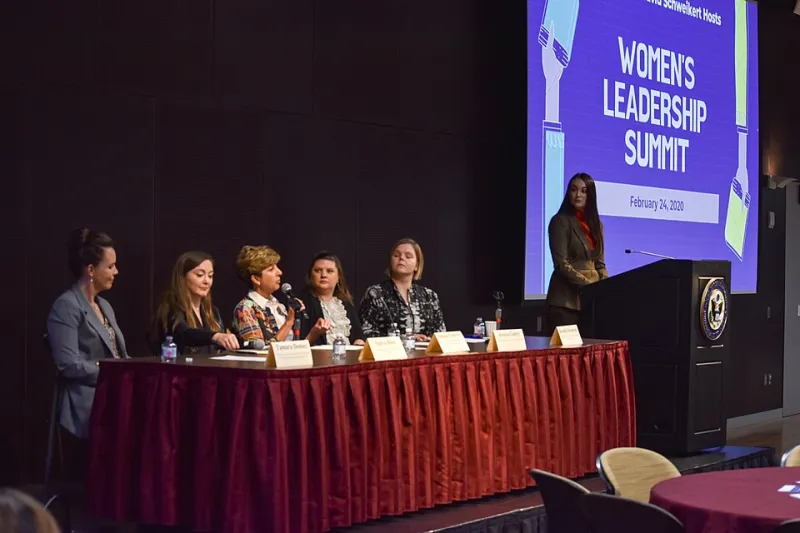
Photo: DHSgov, Public domain, via Wikimedia Commons
The invitation is flattering and deliberately vague. A founder, a chair or an investor suggests that a senior woman in the business might "join the board as an observer" — to gain exposure, to build a governance CV, to be in the room when the big decisions are taken. Nothing is said about duration. Nothing is said about voting rights, committee membership, remuneration or what happens at the end. The arrangement begins, and then it simply continues.
Observership is not a bad idea in itself. In venture-backed and founder-led technology companies it is a long-established mechanism: investors appoint observers to watch their capital, and executives use observer seats to learn how boards actually behave. The difficulty arises when observership is repurposed as a diversity intervention without any of the governance scaffolding that would make it a genuine pathway to a directorship. For many women in UK tech, the observer chair becomes a very comfortable waiting room with no door at the far end.
A seat with a view, not a lever
The legal position is more modest than the language implies. A board observer is not a director within the meaning of the Companies Act 2006. They owe no fiduciary duties of the kind that attach to directors, and in return they hold no vote, cannot be counted in a quorum, and have no statutory right to receive board papers. Companies routinely reserve the right to withhold documents where confidentiality, conflict or market-abuse considerations apply — a legitimate safeguard, but one that can remove the observer from precisely the discussions that would build her governance judgement.
Observers are also commonly excluded from closed sessions, from remuneration deliberations and from any committee that handles sensitive succession or audit matters. They are rarely covered by directors' and officers' liability insurance in their own right, and they are seldom paid. None of this is improper. It is simply a reminder that observation is a courtesy extended by the board, revocable at will, and not a governance office with defined entitlements.
There is a symmetrical risk that is rarely discussed. If an observer behaves in practice as though she were a director — directing strategy, signing off decisions, holding herself out as such — she may expose herself to the de facto director analysis that UK courts have applied in other contexts. The role can therefore be simultaneously too weak to influence and too exposed to protect.
The pipeline that was never plumbed
In UK tech, observership flourishes for three reasons. The first is structural: private and scale-up boards are small, founder-dominated and often governed by investors' rights schedules rather than by the UK Corporate Governance Code, so an observer seat is cheap to grant. The second is reputational: an observer adds a name and a face to the governance narrative without altering the composition of the board that must be disclosed. The third is aspirational: observership is described as a pipeline, and pipelines sound like progress.
The counting rules matter here. Board diversity reporting — the voluntary targets stewarded by the FTSE Women Leaders Review, which succeeded the Hampton-Alexander and Lord Davies reviews — measures directors. Observers do not appear in those numbers. A company can therefore present a photograph, a quote and a "board observer programme" while its statutory board remains unchanged. The invitation does the work of an appointment without any of the accountability.
For an individual, the arithmetic is unforgiving. Two years as an observer produces two years of familiarity with a single company's board, but not the formal directorship that search firms look for when compiling a longlist for a non-executive role. The Voluntary Code of Conduct for Executive Search Firms asks consultants to consider diverse candidates for board appointments; it does not ask them to treat observership as equivalent experience. Unless the arrangement is documented and the transition is sponsored, the CV line reads as proximity, not authority.
When the optics become the job
There is a subtler cost. Observers are frequently invited to do reputational labour: to appear on panels, to speak at the company's International Women's Day event, to be photographed with the leadership team, to reassure prospective recruits and investors that the culture is serious about women in senior roles. That labour is real work, and it is rarely recognised in objectives, in pay or in the board's own evaluation of its effectiveness.
Being cast as "the diversity observer" is a specific trap. It narrows a woman's contribution to the subject of her presence rather than her expertise, and it makes it harder for her to be considered for the finance, audit or remuneration committee roles that are the conventional route to a senior non-executive portfolio. The most useful observer is one whose remit is commercial, technical or operational — and who is seen that way by the rest of the table.
The terms that turn observation into a pathway
Observership becomes a route only when it is written down. Before accepting, a woman should seek agreement on the following, ideally in a letter countersigned by the chair.
A defined term. Twelve to eighteen months, with a scheduled review and a stated end date. Open-ended arrangements drift.
A named destination. What role is this observership preparing her for, on which board, and by when? If the answer is "a future directorship when one arises", ask what the succession slate looks like and who owns it.
Committee exposure. Observership of the audit or remuneration committee is materially more valuable than attendance at the main board alone. Ask for one.
Paper access and a confidentiality protocol. Confirm which categories of document she will receive by default, and how exclusions will be communicated and minuted.
A sponsor, not just a mentor. The chair or a senior non-executive should be accountable for advocating her appointment when the vacancy appears. Sponsorship is the difference between exposure and advancement.
Protection and recognition. Clarify D&O cover, indemnity, expenses and any fee. Unpaid governance work is not neutral; it systematically excludes those who cannot subsidise it.
A reference. At the close of the term, a written statement from the chair confirming her contribution and readiness for a directorship.
Questions to ask before you accept
Ask what proportion of the company's observers have become directors in the past five years. In most UK tech companies this figure is not tracked; if it is not, the pipeline is a description of intent rather than a record of outcomes. Ask who else was considered. Ask whether the board's annual effectiveness review covers observers. Ask whether the role will be described accurately in any external communication — as observation, not directorship — so that neither she nor the company overstates it.
What employers should commit to
Three commitments would change the picture quickly. First, publish the conversion rate from observership to directorship, by gender, and set a target for it. Second, cap observership at a fixed term, with automatic review by the nomination committee. Third, include observers in board evaluation and in succession planning, so that the arrangement is governed rather than merely granted.
A chair at the table is worth having. A chair without a vote, a term or a route is a holding pattern — and UK tech has room for fewer of those than it imagines. The women taking these seats are not asking for a favour. They are asking for the terms on which any serious pathway is built: a destination, a sponsor and a date.