The Availability Tax: Auditing Flexibility in UK Tech’s Senior Ranks

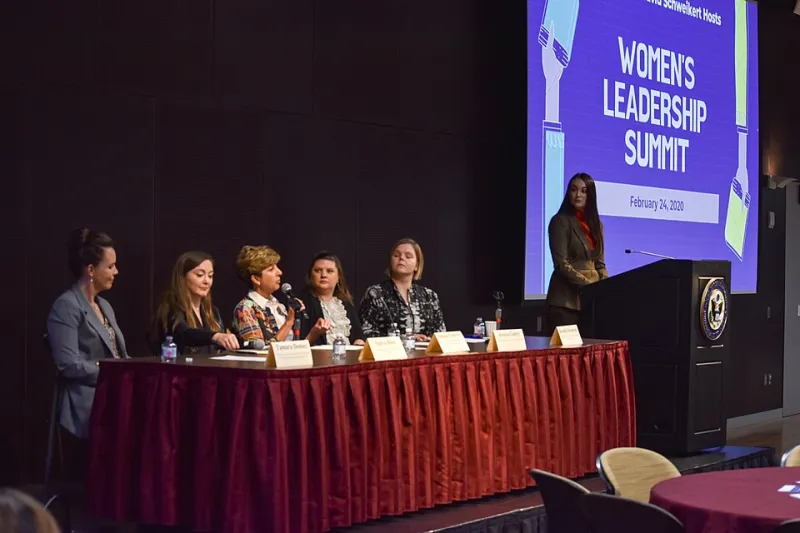
Photo: senior woman technology director flexible working UK office meeting, via bookhotelcompare.com
Flexibility has become a standard line in UK tech recruitment. Director-level adverts now routinely promise hybrid working, compressed hours and, in some cases, a four-day schedule. Yet the distance between a pledge in a job pack and the lived reality of a head-of or director role remains one of the most persistent gaps in the sector’s equality agenda. For women considering senior appointments, the critical question is not whether flexibility is advertised. It is whether the role has been designed to survive it.
What the adverts say—and what they leave out
A practical audit of senior UK tech adverts reveals a familiar pattern. Flexibility is often mentioned in the “what we offer” section, alongside private healthcare and a learning budget, rather than in the description of the role itself. The responsibilities then assume unrestricted availability: leading cross-site teams, chairing weekly executive reviews, responding to incidents, attending client dinners and being visible to investors. Very few adverts state how these duties would be redistributed under a reduced-hours arrangement.
This matters because flexibility at senior level is not primarily a scheduling question. It is a question of role design. A four-day director can work if the organisation has decided which meetings matter, how decisions are escalated, and who deputises during non-working days. Without those decisions, the flexibility clause simply transfers risk to the individual. The role remains a five-day job; the post-holder is expected to absorb the difference.
The promotion criteria problem
Recruitment is only the visible layer. The more revealing test is promotion. In many UK tech firms, the criteria for director and head-of roles still reward presence, responsiveness and “visible leadership”. These are not neutral measures. They favour people who can attend early calls, stay late, travel at short notice and maintain a continuous stream of informal communication. Women who have negotiated reduced hours often find that the same criteria are applied unchanged, with no adjustment for the fact that their working pattern is legitimate and contractually agreed.
A genuinely flexible seniority model requires promotion panels to ask different questions. Does the candidate demonstrate strategic judgment, or simply availability? Are outcomes being assessed, or hours of visibility? Has the panel considered how leadership is exercised across a team and a week, rather than in a single room at a single time? Without this shift, flexibility becomes a retention tool that quietly caps progression.
Patterns from the negotiating table
Accounts from women who have negotiated senior reduced-hours roles in UK tech follow a consistent pattern. The first obstacle is often not the line manager but the peer group. Colleagues may support the principle while continuing to schedule meetings in ways that make the arrangement untenable. The second is the “small ask” problem: a request to join a call on a non-working day, to review a document during a compressed week, or to attend an evening event “just this once”. Each request appears minor. Cumulatively, they erode the boundary.
The third pattern is the absence of a deputy. Flexible senior roles work best when there is a named alternative for decisions, escalations and external meetings. Without one, the post-holder becomes the single point of failure and is effectively on call. Employers often describe this as a resourcing challenge. Candidates experience it as an availability tax—an unpaid, unspoken supplement to the working pattern they were promised.
The availability tax in practice
The availability tax is not usually written down. It appears in the expectation that a director will monitor messages during a rest day, join a board pack review on a Friday off, or remain reachable during a holiday. It is reinforced by culture rather than contract. In tech, where incidents, releases and investor communication can be time-sensitive, the pressure is real. But the response should not be to pretend that reduced hours can coexist with unlimited access. It should be to design explicit cover arrangements and to treat those arrangements as part of the role, not as a favour.
This is also an equality issue. Women, and particularly women with caring responsibilities, are more likely to seek reduced-hours senior roles. If those roles carry an invisible availability penalty, the sector will continue to promote flexibility in principle while preserving a five-day model in practice. The result is a familiar outcome: women remain in senior roles, but on terms that make the next step harder to reach.
A candidate’s checklist
Before accepting a flexible senior role, ask for specifics rather than assurances. Which meetings are mandatory, and which can be delegated or recorded? Who deputises on non-working days? How are incidents escalated when the post-holder is unavailable? What is the organisation’s policy on out-of-hours contact, and how is it monitored? Ask to see the promotion criteria for the next level and whether they have been reviewed for proximity bias. Speak to someone who already works a reduced pattern at a similar level. If the answers rely on goodwill rather than structure, treat flexibility as a risk, not a benefit.
An employer’s checklist
Employers serious about flexible seniority should audit roles, not just policies. Review job adverts to ensure flexibility is described in the responsibilities, not only in the benefits. Examine promotion criteria for proxies for availability. Identify a named deputy for every reduced-hours senior post. Set clear expectations about response times and meeting hours. Train managers to distinguish between an emergency and a convenience. Monitor who attends key meetings and who is absent—and ask why. Finally, publish the outcomes, not merely the commitment.
The test that matters
The four-day director is not a recruitment slogan. It is a test of whether a company has redesigned authority for a modern workforce. UK tech has spent recent years promising flexibility to senior women. The next step is to prove that the promise survives contact with the calendar, the promotion round and the incident call. Until then, flexibility at the top will remain a clause in the pack—not a feature of the job.